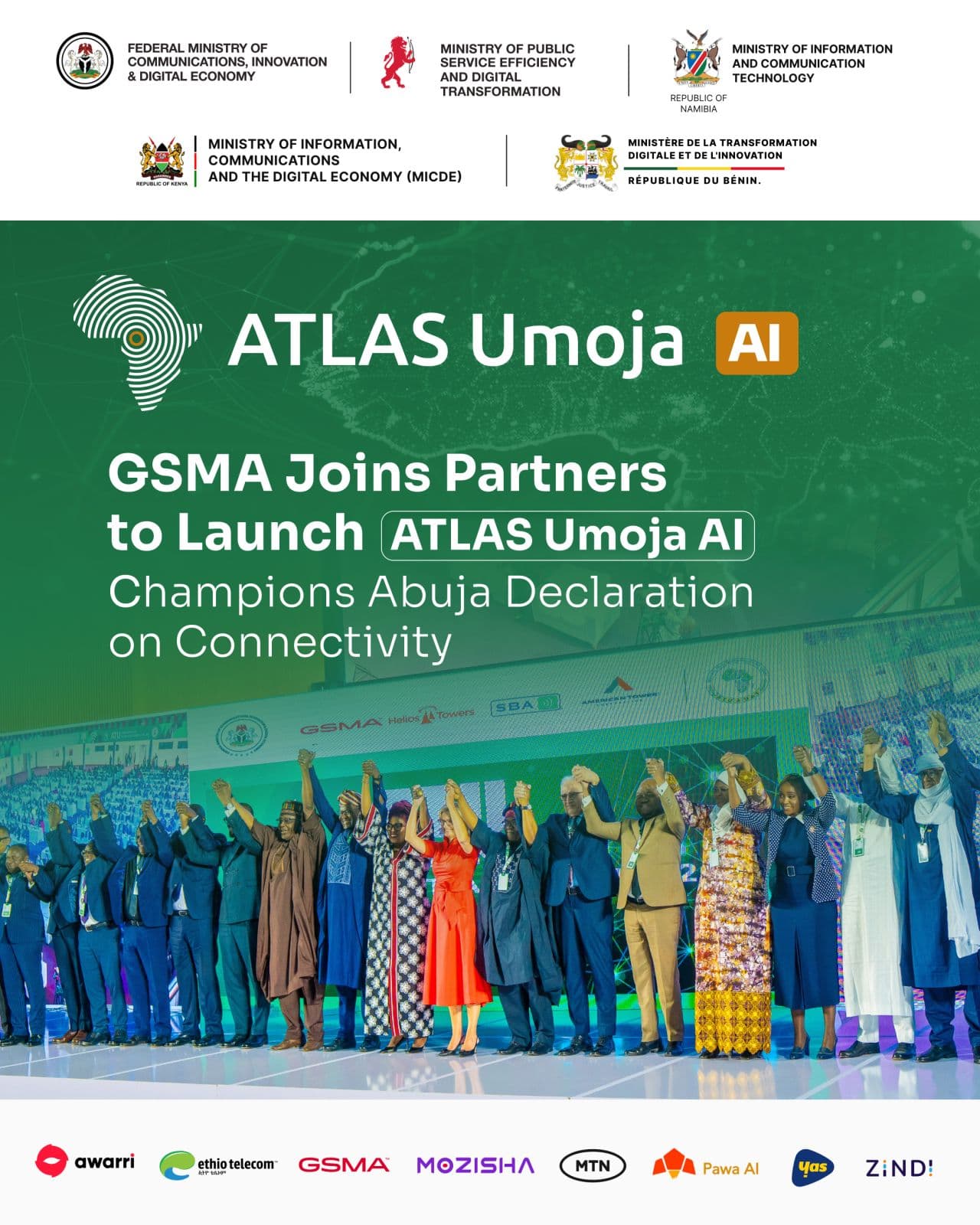
When African telecommunication ministers, technology leaders, and ecosystem partners gathered in Abuja to launch ATLAS Umoja AI and adopt the Abuja Declaration on Meaningful Connectivity, the announcement represented more than another milestone in artificial intelligence. It reflected a growing recognition that Africa’s digital future cannot be built by technology alone. It requires coordinated action between governments, private sector innovators, research institutions, and organizations committed to developing the continent’s talent ecosystem.
The Launch of ATLAS Umoja AI
A Pan-African initiative focused on advancing AI solutions that understand African languages and cultural contexts, demonstrates a shift in how the continent is approaching innovation. Rather than relying on isolated technological breakthroughs, the initiative embraces collaboration as the foundation for building AI that is relevant, inclusive, and capable of addressing Africa’s unique opportunities and challenges.
For businesses, policymakers, and talent development organizations, this collaboration offers an important lesson. The future of AI in Africa will not be determined solely by the sophistication of its models or the scale of its infrastructure. It will also depend on the strength of the partnerships that connect technology with people, local expertise, and real-world implementation.
Technology Alone Cannot Build an Inclusive AI Future
Artificial intelligence is often discussed in terms of computing power, advanced models, and breakthrough technologies. Yet one of the greatest barriers to AI adoption in Africa is far less technical: representation.
Africa is home to more than 2,000 living languages, making it the most linguistically diverse continent in the world. Despite this richness, African languages remain significantly underrepresented in the datasets used to train many of today’s AI systems. As a result, millions of people interact with digital tools that struggle to understand their languages, contexts, and cultural nuances.
The challenge extends beyond language. AI systems are only as effective as the data, perspectives, and expertise used to develop them. When local knowledge is absent from the development process, technology risks excluding the very communities it is intended to serve. According to GSMA, less than 1% of web content is available in African languages, despite the continent’s remarkable linguistic diversity.
This is what made the launch of ATLAS Umoja AI particularly impeccable. Rather than focusing solely on building another AI platform, the initiative recognizes that inclusive innovation requires contributions from multiple stakeholders. Governments can establish enabling policies, technology companies can provide infrastructure, research institutions can advance knowledge, and ecosystem partners can strengthen the talent needed to transform ambitious ideas into practical solutions.
Ultimately, building AI that reflects African realities is not simply a technology challenge. It is a collaboration challenge. The quality of future AI systems will depend not only on advances in machine learning but also on whether the right institutions, industries, and people are working together to shape them.
Partnerships Create the Conditions for Innovation
One of the most significant outcomes of the ATLAS Umoja AI launch was not the unveiling of a new AI initiative, it was the coalition behind it. Governments, telecommunications providers, AI companies, research institutions, and ecosystem partners came together around a shared objective: building AI that is developed with Africa, not simply deployed in Africa.
This collaborative approach reflects an important shift in how innovation is taking shape across the continent. Historically, technology initiatives have often operated in silos, with governments developing policies, private companies building products, and educational institutions focusing on skills development independently. While each plays an important role, sustainable digital transformation requires these efforts to be connected.
This is especially true for artificial intelligence. Building AI that serves African communities demands more than technical expertise. It requires policy frameworks that encourage innovation, reliable digital infrastructure, access to high-quality local data, research that reflects African realities, and a workforce equipped with the skills to develop, deploy, and continuously improve AI solutions.
The World Economic Forum’s Future of Jobs Report 2025 identifies AI, big data, and technological literacy among the fastest growing skill areas globally. At the same time, employers increasingly value analytical thinking, resilience, and continuous learning qualities that enable people to adapt as technology evolves. These findings reinforce a simple reality: investment in technology must be matched by investment in people.
This is where ecosystem partnerships become particularly valuable. Organizations working across policy, education, industry, and talent development each contribute a different piece of the puzzle. Together, they create an environment where innovation can move beyond announcements and into practical, long-term impact.
The Talent Layer: Turning AI Ambition into Real World Impact
Every significant technological shift has been powered by people long before it was powered by machines. Artificial intelligence is no different. While discussions around AI often focus on algorithms, computing infrastructure, and large language models, these technologies only create value when people have the skills to design, deploy, govern, and apply them to real-world challenges.
This is why talent development deserves to sit alongside technology in conversations about Africa’s AI future.
The World Economic Forum’s Future of Jobs Report 2025 projects that by 2030, 170 million new jobs will be created globally while 92 million existing roles will be displaced, resulting in a net gain of 78 million jobs. However, the report also notes that nearly 40% of today’s core job skills are expected to change, making reskilling and upskilling one of the defining challenges of this decade.
For Africa, this challenge is also an opportunity…
The continent has one of the world’s youngest and fastest growing populations. If governments, educational institutions, employers, and ecosystem partners invest intentionally in digital skills, AI literacy, and workforce readiness, Africa will not simply participate in the global AI economy, it will help shape it.
Mozisha’s contribution to ATLAS Umoja AI focuses on “the talent layer.” They work with the belief that digital infrastructure alone cannot transform economies. Infrastructure creates possibilities, but skilled people convert those possibilities into products, businesses, research, public services, and economic growth.
Ultimately, Africa’s AI ambition should not be measured only by the sophistication of the technologies it develops, but also by the number of people it equips to build, use, and improve those technologies. Long term success will depend on creating an ecosystem where innovation and talent develop together rather than independently.
From Vision to Execution.
Major declarations and strategic partnerships are important milestones, but they are only the beginning. The real measure of success will be what follows: how effectively commitments are translated into better digital infrastructure, stronger AI ecosystems, and more opportunities for African innovators, researchers, and young professionals.
For businesses, this means moving beyond simply adopting AI tools to investing in the people who can use them effectively. For governments, it means creating policies that encourage innovation while ensuring that AI development remains inclusive and locally relevant. For universities and training institutions, it means preparing graduates with the technical and human skills required in an AI-driven economy. And for ecosystem partners, it means continuing to bridge the gap between emerging technologies and the workforce that will sustain them.
The launch of ATLAS Umoja AI offers a practical example of this mindset. Rather than treating AI as a purely technological challenge, the initiative brings together policymakers, industry leaders, research institutions, and ecosystem partners like Mozisha around a shared objective. That collaborative model may prove just as valuable as the technology itself because sustainable innovation depends on coordinated action, not isolated progress.
Africa’s AI future will not be determined by the sophistication of its algorithms alone. It will be shaped by the strength of the ecosystems that support them where governments, businesses, researchers, and talent work toward a common goal. The conversations and commitments made through initiatives like ATLAS Umoja AI demonstrate that the continent is beginning to embrace this collaborative approach.
As AI continues to redefine industries and economies, Africa has an opportunity to build solutions that reflect its own languages, cultures, and aspirations. Achieving that vision will require more than technological breakthroughs. It will require sustained partnerships, deliberate investment in talent, and a shared commitment to ensuring that innovation delivers meaningful opportunities for people across the continent.