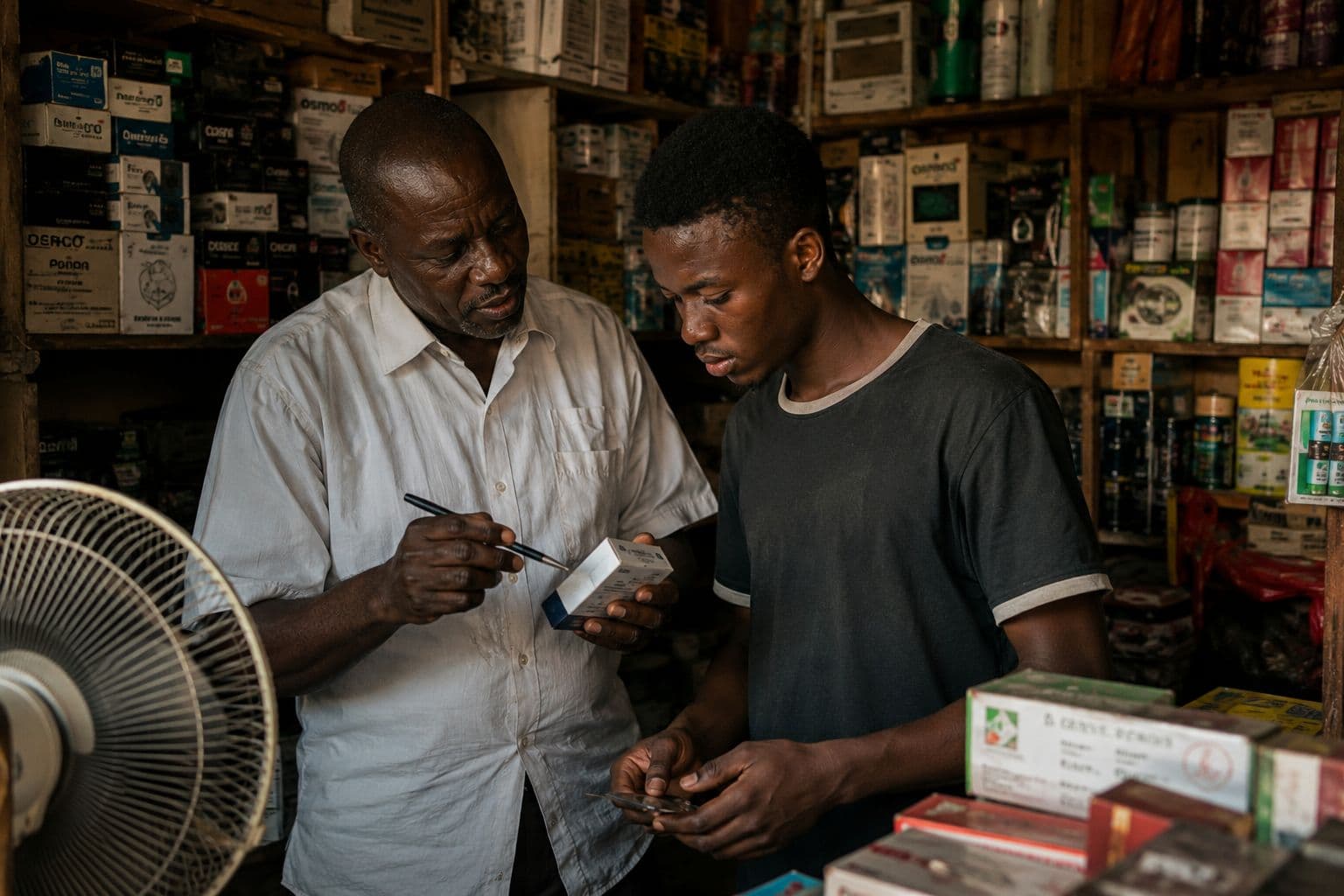
Uwa Bụ Ahịa: Upgrading the Igbo Apprenticeship System for Africa's AI Future
There is an old Igbo saying:
"Uwa bụ ahịa."
The world is a marketplace.
It is a simple phrase, but it reflects a powerful truth. People learn by doing. They grow through responsibility. And prosperity comes not only from knowledge, but from the ability to create value.
Long before business schools, startup accelerators, and online certifications, Africa had already developed systems for turning inexperienced young people into entrepreneurs. Few have been as successful as the Igbo Apprenticeship System, known as Imu Ahia or Igba Boi.
For generations, the system has transformed ordinary young people into traders, manufacturers, business owners, and wealth creators. Its success comes from a simple formula: mentorship, practical experience, trust, and ultimately, ownership.
The process traditionally unfolds in three stages:
Imu Ahia: Learning the trade.
Igba Boi: Practicing the trade under the guidance of a mentor.
Akụnaụba: Settlement, where the apprentice receives the support needed to start an independent venture.
The brilliance of the system is not simply the transfer of knowledge. It is the transfer of capability.
Apprentices learn how to think, execute, solve problems, build relationships, earn trust, and navigate uncertainty. These are lessons that cannot be fully taught in a classroom.
This matters even more in the age of Artificial Intelligence.
AI is making information abundant. Technical knowledge that once took years to acquire can now be accessed in seconds.
Yet the most valuable skills remain deeply human: judgment, creativity, resilience, communication, and the ability to solve real-world problems.
These skills are developed through experience.
And experience cannot be downloaded.
It must be earned.
The opportunity before us is to modernize the apprenticeship model for a digital world.
The shop becomes a remote workplace.
The local mentor becomes a software engineer, product manager, designer, or entrepreneur working anywhere in the world.
Instead of managing inventory, apprentices contribute to live digital projects, build products, automate workflows, analyze data, and help solve customer problems.
They learn by doing real work.
Not simulations.
Real work.
The most important principle we must preserve is settlement.
The traditional system understood a simple truth: learning without opportunity creates frustration.
In the digital economy, settlement may take the form of a verified portfolio, direct access to global jobs, or support for launching a new venture. The objective remains the same.
Not dependency.
Ownership.
Much of the global conversation about AI focuses on compute, models, and infrastructure. These investments matter, and Africa should continue to build its capabilities in each of these areas.
But Africa's greatest advantage may lie elsewhere.
The continent's most abundant resource is not compute power. It is human potential.
While others compete primarily on technology, Africa has an opportunity to compete through talent: developing millions of builders, problem-solvers, entrepreneurs, and professionals who can apply AI to real-world challenges across agriculture, healthcare, education, manufacturing, logistics, and financial services.
For generations, the Igbo Apprenticeship System has transformed potential into capability through mentorship, responsibility, trust, and opportunity.
The lesson for the AI age is not that Africa must abandon its traditions to compete.
It is that some of our most valuable innovations were never imported.
They were built here.
The future may be digital.
But the principles that create prosperity remain the same:
People learn by doing.
Communities grow when knowledge is shared.
And lasting wealth is created when learning leads to ownership.